Asthma Tree (Asmaboom) #
Adhatoda vasica
Quick Info #
- Distribution & habitat: originating in India
- Family: Acanthaceae
- Florescence: -
- Fruiting: -
- Leaf habit: evergreen
- Name origin: The common name likely refers to the plant’s use in treating asthma. “Vasaka” translates to “remover of bodily toxins”.
- Other names: malabar nut tree, vasaka
Description #
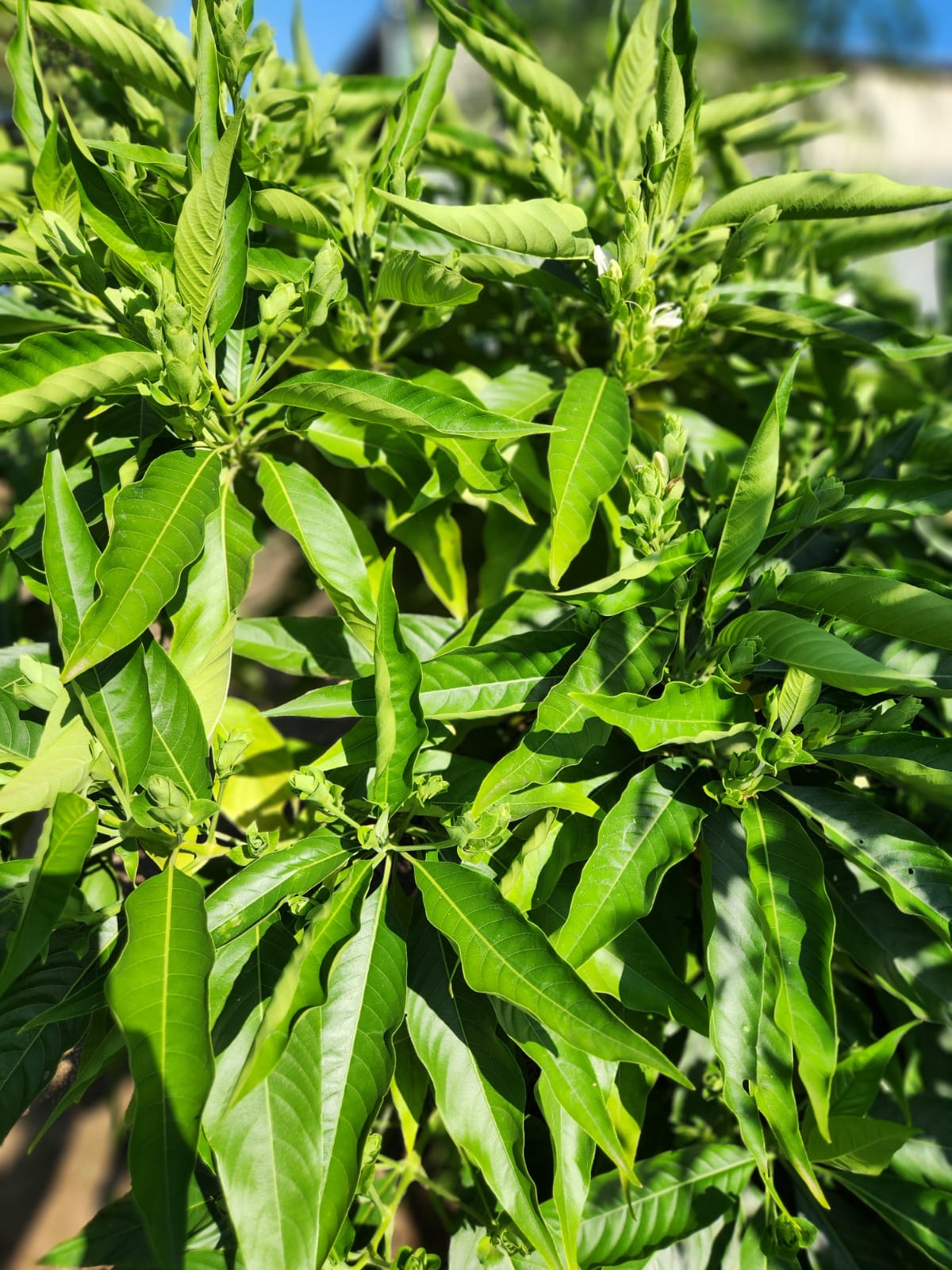
The asthma tree, despite its name, is actually considered a shrub, only growing around 1 to 4 metres high. The leaves are simple and grow oppositely, known for their distinctive, lance-like shape. The colour of the tubular flowers can range between white, pink and purple.
Uses & Ecology #
The plant has a very long record of indigenous Indian medicinal use. It is used in Ayurvedic and Unani medicine. Many of its uses, including some of the following, are connected to these systems.
The asthma tree is known for the treatment of inflammation and respiratory tract ailments like asthma, bronchitis, and cough. Some abortifacient and oxytocic effects have also been reported. Ayurveda has recognized a positive impact on liver health.
The antioxidants contained in vasaka are connected to the neutralization of free radicals implicated in the aging process and the development of chronic diseases.
The leaves and roots are particularly valued for medicinal use. Some properties, like antiasthmatic and antitussive properties, have been investigated in modern medicine, and a number of historic uses seem to have been revisited.
Caution: Do not medically use or ingest any plant parts before consulting a qualified health practitioner. Any mentioned traditional uses are based on cultural practices and anecdotal evidence. They are not necessarily clinically proven or supported by modern scientific studies.
References #
- Bruhn J.G., Claeson U.P., Malmfors T. & Wikman G. (2000) Available at: https://www.sciencedirect.com/science/article/abs/pii/S0378874100002257 (Accessed: 9 December 2025)
- Flora & Fauna Web (2021) Available at: https://www.nparks.gov.sg/florafaunaweb/flora/6/1/6109 (Accessed: 9 December 2025)
- Sri, Sindhu (2023) Available at: https://www.longdom.org/open-access/vasaka-adhatoda-vasica-nees-traditional-uses-and-medicinal-applications-in-ayurveda-104993.html (Accessed: 9 December 2025)