Cherimoya #
Annona cherimola
Quick Info #
- Distribution & habitat: many subtropical regions worldwide
- Family: Annonaceae
- Florescence: -
- Fruiting: -
- Leaf habit: briefly deciduous, semi-deciduous or evergreen
- Name origin: the common name originates from the Quechua word “chirimuya” which means “cold seeds” – referring to the conditions in which the seeds will germinate
- Other names: custard apple, sherbet-fruit
Description #
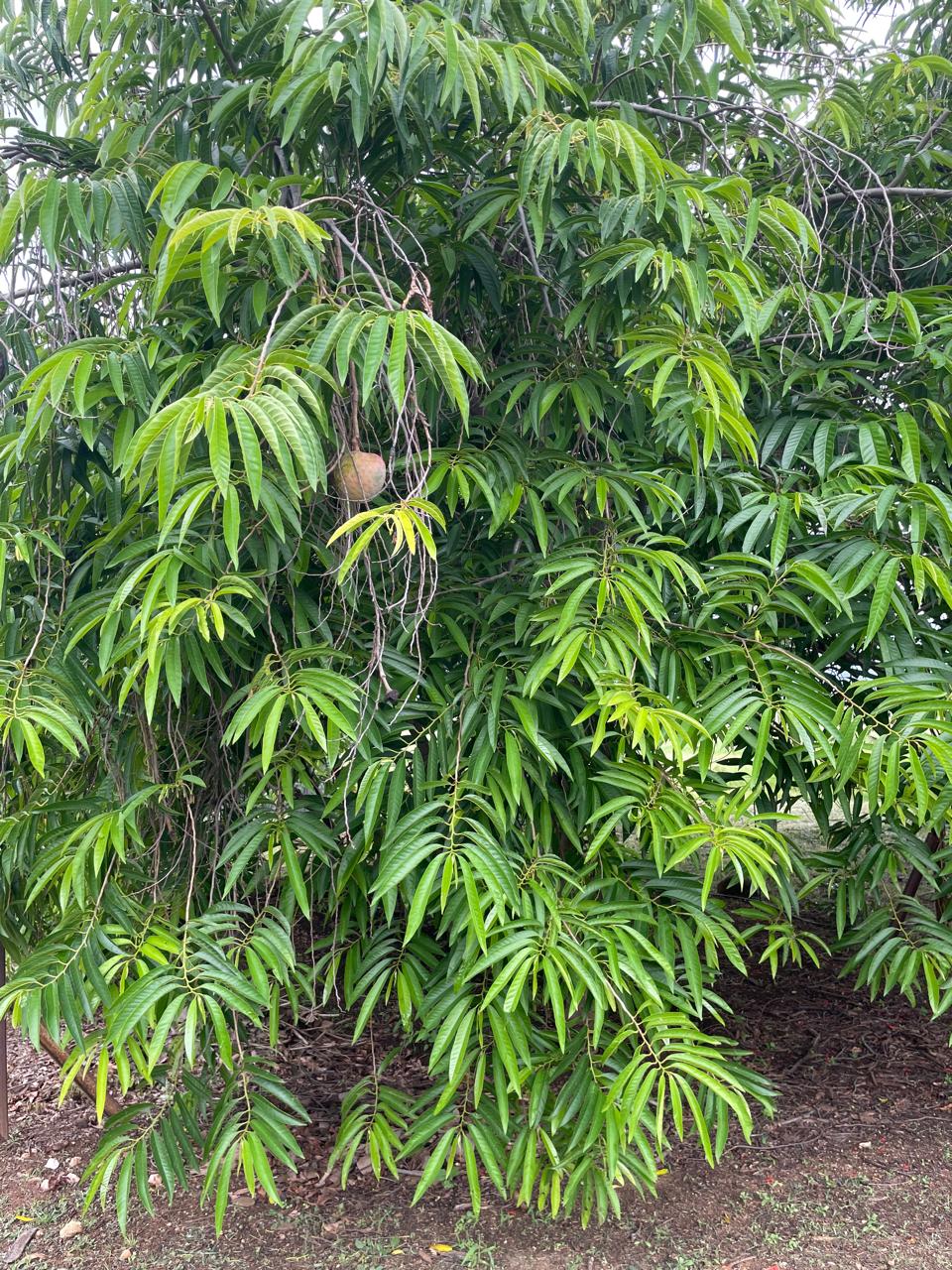
The erect cherimoya tree is a fast grower and reaches between three and ten metres tall. It has a short bole, a dense, spreading crown, and branches that start to grow down low.
The large fruit is green and scaly, shaped somewhat like a heart, containing flesh of a custard-like consistency, and glossy, black seeds. The light-green leaves are ovoid, soft and velvety on the one side while slightly hairy on the other. The flowers are fragrant and yellow-green.
Uses & Ecology #
The fruit is regarded as one of the finest among the tropical fruits. It can be enjoyed raw and tastes like a cross between banana, pineapple and vanilla. Cakes, custard, ice cream, sherbet and a soft drink can also be made from the fruit, but the seeds shouldn’t be eaten. The fruit is fermented to make an alcoholic drink.
Traditionally, the powdered seed has been ingested with milk or water for a cathartic and emetic effect, mixed with grease and applied to skin to treat parasitic disorders, and spread in the hair to kill lice and prevent dandruff. Nerve disorders are treated using the flower. The leaves are also used in different forms of application to treat conditions like constipation, headaches, indigestion and labour pains.
An oil from the seeds has been used in paint. The crushed seeds have also been used as insecticide.
Cherimoya seeds have also been shown to contain components that are useful in pharmaceutical sciences.
Bees and beetles are attracted to the flowers. Birds and mammals sometimes eat the fallen fruits.
Caution: Do not medically use or ingest any plant parts before consulting a qualified health practitioner. Any mentioned traditional uses are based on cultural practices and anecdotal evidence. They are not necessarily clinically proven or supported by modern scientific studies.
References #
- Fern, K. (2025) Available at: https://tropical.theferns.info/viewtropical.php?id=Annona+cherimola (Accessed: 8 December 2025)
- Gardenia (n.d.) Available at: https://www.gardenia.net/plant/annona-cherimola-cherimoya-custard-apple (Accessed: 8 December 2025)
- Orwa C., Mutua A., Kindt R., Jamnadass R., Simons A. (2009). Available at: https://apps.worldagroforestry.org/treedb2/speciesprofile.php?Spid=1728 (Accessed: 8 December 2025)
- Plants for a Fututre (n.d.) Available at: https://pfaf.org/user/Plant.aspx?LatinName=Annona+cherimola (Accessed: 8 December 2025)
- Scalar (2022) Available at: https://scalar.usc.edu/works/plants-and-people/annona-cherimola-the-most-delicious-fruit-known-to-man (Accessed: 8 December 2025)