Lavender #
Lavandula species
Quick Info #
- Distribution & habitat: native of the Mediterranean – also in Sahara region toward Arabia and as far as India
- Cultivation: full sun and dry, well-drained soil
- Family: Labiatae
- Name origin: possibly from the Latin lavare, meaning “to wash”
- Propagation: seeds (difficult) or cuttings rooted in wet sand
- Plant: perennial
Description #
Lavender arrived in Britain in the 1500s, which is speculated by some to have been a Roman effort, and English lavender became a perfume industry staple. There are at least 29 known species of lavender. The great amount of time that lavender has been around lends its name some gravity in tradition and superstition. The shrub varies in colour, flower colour, height, leaf formation and shape, depending on the species.
The proper naming of lavender species was a process. There used to be some confusion about what was named what, but proper classification and correct Latin names eventually came along. The commonness of different varieties in South Africa have varied with demand.
Available at Kruiekraal:
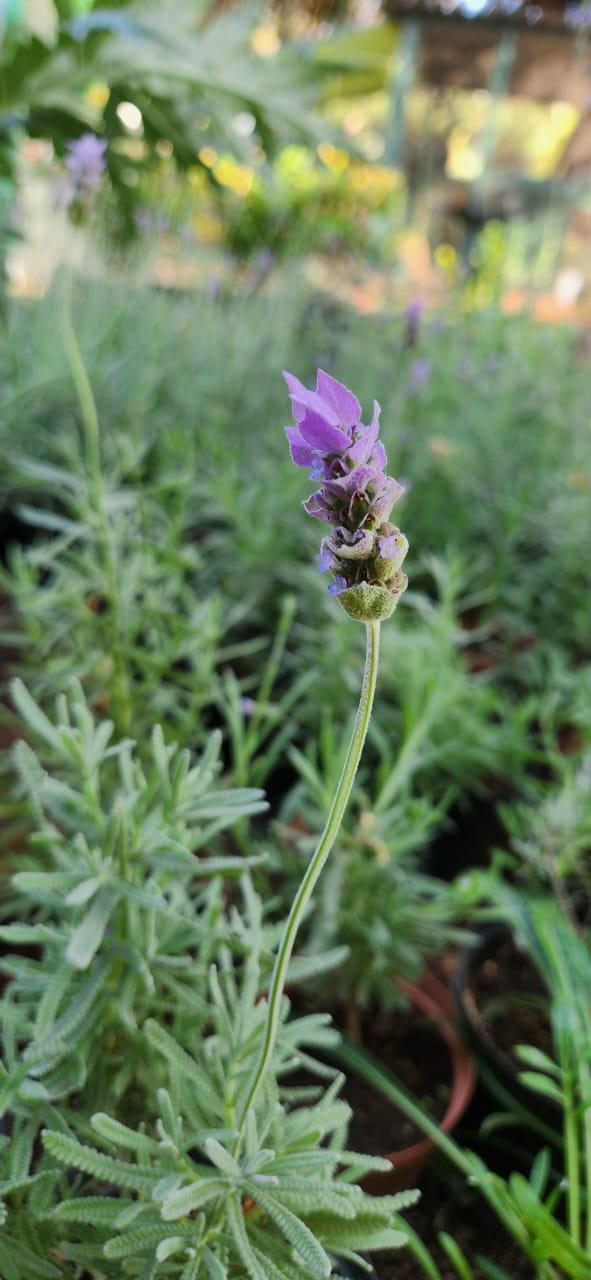
- French lavender (Lavandula dentata): This variant of lavender is not to be confused with Lavandula stoechas, which may share its common name. Lavandula dentata is a fragrant, half-hardy lavender with finely-toothed, green leaves. It has a balsamic, delicate scent and can be clipped to form a low hedge of fragrant flowers. It has no medicinal use, but at least it has beauty going for it.
- Margaret Roberts lavender (Lavandula x intermedia): the flowers have a sharper, stronger scent than other lavender species. As a crossbreed, this variant may differ in properties from some information on this page.
Uses & Ecology #
In the place to which it is native, lavender was used for cosmetic and domestic purposes by Arabs and Egyptians. It also has a long history of use in bath-time oils and perfumes. A calming and unwinding effect is found in tying a small bunch of lavender in a face cloth and dropping it in a bath. This is used as a scrub with a bit of soap.
It’s been thought that lavender oil has antibacterial, antispasmodic, antiseptic, anxiety-calming, carminative, stimulant and stress-relieving properties, but modern use of it largely involves the making of perfumes, soaps and toiletries.
The herb is very spicy, thus used sparingly in food, adding some real kick to fish soup and mutton. It is used along with other herbs in a tea recipe. The antiseptic properties of lavender are said to be useful in gargles and mouthwashes.
Lavender is a good deterrent of various pests if planted around the vegetable garden.
Caution: Do not medically use or ingest any plant parts before consulting a qualified health practitioner. Any mentioned traditional uses are based on cultural practices and anecdotal evidence. They are not necessarily clinically proven or supported by modern scientific studies.
References #
- Bremness, L. (1998) The Complete Book of Herbs: A practical guide to growing & using herbs. South Africa: Southern Book Publishers (Pty) Ltd
- Gardenia (n.d.) Lavandula x intermedia (Lavandin). Available at: https://www.gardenia.net/guide/lavandula-intermedia-lavender (Accessed: 28 January 2026)
- Hey, B. (1992) A Celebration of Herbs for the South African Garden & Home. Cape Town: Struik Publishers (Pty) Ltd.
- Roberts, M. (2012) My 100 Favourite Herbs. Cape Town: Struik Nature.