Mackaya (Bosklokkiesbos) #
Mackaya bella
Quick Info #
- Distribution & habitat: Eastern Cape, KwaZulu-Natal, Limpopo and Mpumalanga – evergreen forests along edges of streams
- Family: Acanthaceae
- Florescence: August to December
- Fruiting: fruit matures and splits open to release seeds during the summer
- Leaf habit: evergreen
- Name origin: “Mackaya” is derived from the name of James Townsend Mackay, while “bella” means “beautiful”
- Other names: blouklokkiesbos, forest bell-bush, icaphozi (Zulu), mufhanza (Venda), river bells, umzwatsi (Swati)
Description #
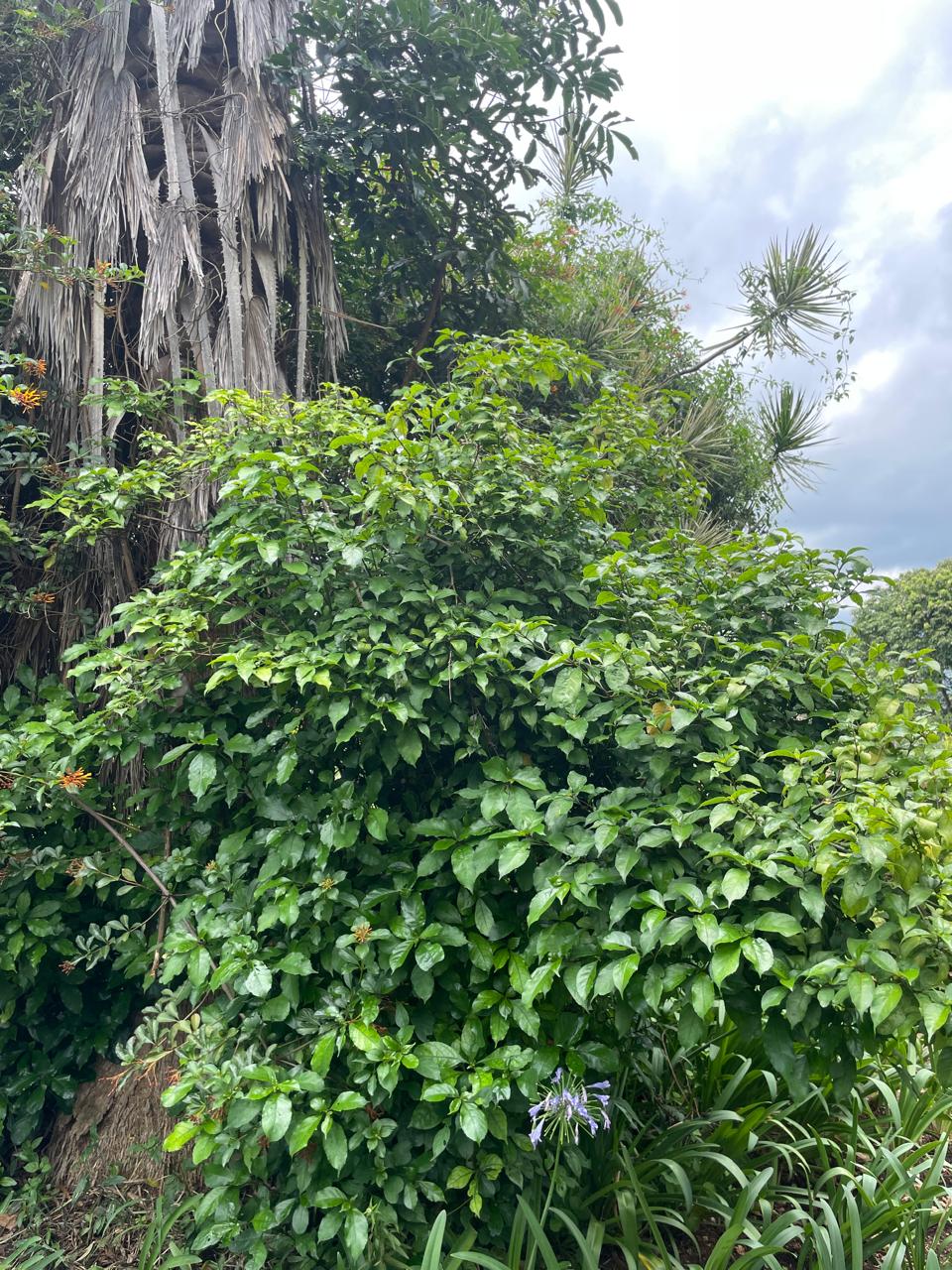
This small, endemic tree, sometimes a multi-stemmed shrub, is characterised by smooth bark, thin branches and glossy, green leaves. The bark gets fissured lengthwise with age.
When flowering season comes, the flowers are big and breathtaking – mauve to white in colour with purplish-pink to burgundy lines on them – and they grow in masses. The flowers are tubular and, flaring toward the mouth, are shaped like bells (campanulate). They have also been described as trumpet-shaped and give an impression of glowing in the shades where they thrive.
A narrow capsule shaped like a club, the green fruit matures to brown and splits explosively into 2 valves to release seeds during the summer.
Uses & Ecology #
Bees love the nectar of the flowers. They are guided to it by the markings on the flowers. The flowers may also attract birds.
Mackaya bella is a host plant to Blue Pansy Butterfly caterpillars, which feed on it.
The name’s meaning is no coincidence – mackaya bella is often planted for its beauty. It can also form a hedge in a shaded area, and the dry wood has been used to start a fire by friction.
Parts of it are said to have been used in traditional medicine.
Caution: Do not medically use or ingest any plant parts before consulting a qualified health practitioner. Any mentioned traditional uses are based on cultural practices and anecdotal evidence. They are not necessarily clinically proven or supported by modern scientific studies.
References #
- Becking, D. (n.d.) Mackaya bella. Available at: https://treesa.org/mackaya-bella/ (Accessed: 26 November 2025)
- Muthsinyalo, Thompson T. (2001) Mackaya bella. Available at: https://pza.sanbi.org/mackaya-bella (Accessed: 26 November 2025)
- Plantbook (n.d.) Mackaya bella. Available at: https://www.plantbook.co.za/mackaya-bella/ (Accessed: 26 November 2025)
- Wentzel, J. (n.d.) Mackaya bella. Available at: https://wildflowernursery.co.za/indigenous-plant-database/mackaya-bella/ (Accessed: 26 Nov 2025)