Elderberry (Vlierboom) #
Sambucus nigra
Quick Info #
- Distribution & habitat: Northern and Southern hemispheres – forested temperate or subtropical areas
- Family: Adoxaceae
- Florescence: late spring and early summer
- Fruiting: autumn
- Leaf habit: deciduous
- Name origin: “sambucus” is possibly connected with “sambuca” – a kind of harp
- Other names: black elder, black elderberry, elder, European elder, European elderberry, common elder
Description #
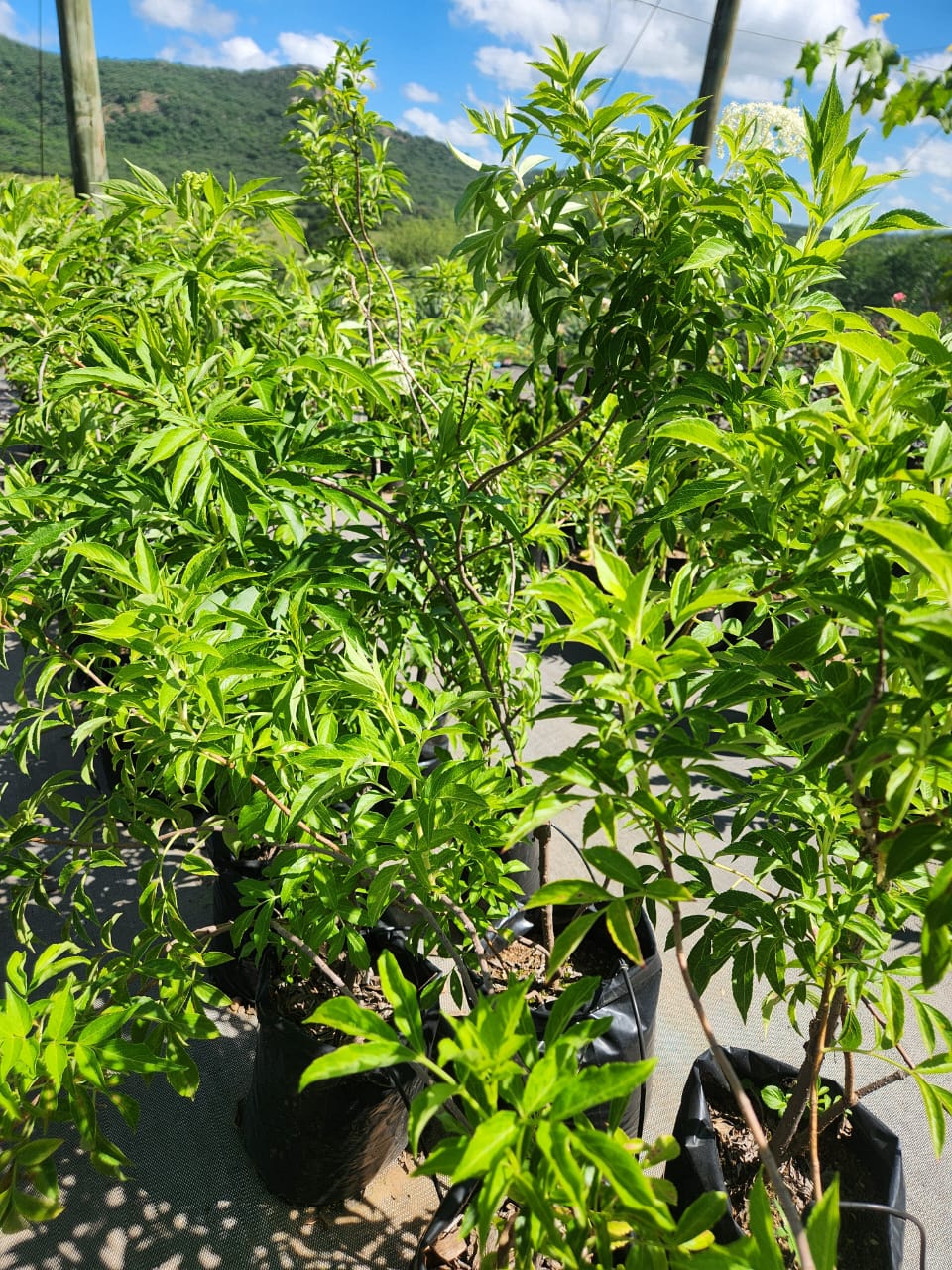
The elderberry is commonly a large shrub or small tree with multiple trunks. It is a fast grower that can tolerate a wide range of soils.
The large leaves grow in pinnate compounds with toothed leaflets. They are known for their unpleasant fragrance when crushed. The flowers are musky, white and shaped like saucers, growing in clusters. They are followed by black, small berries.
Uses & Ecology #
The berries are eaten by birds and wildlife, but people also make them into jellies, medicines, pies and wines. The fruit can be dried, which makes it less bitter. It can also add flavour to preserves and sauces.
In traditional medicine, it’s been used as a cold treatment, diuretic, eye lotion, flu treatment, salve for bruises, and upset stomach treatment.
The flowers can be made into a flavouring syrup, and unopened flower buds have been pickled as caper substitutes. The flowers are also used to add a muscatel flavour to stewed fruits, jams and jellies, and to make a sparkling wine or sweet tea (when dried).
The leaves can be used to give fats and oils a greenish colour.
Caution: Do not medically use or ingest any plant parts before consulting a qualified health practitioner. Any mentioned traditional uses are based on cultural practices and anecdotal evidence. They are not necessarily clinically proven or supported by modern scientific studies.
References #
- Britannica (2025) elderberry. Available at: https://www.britannica.com/plant/elder-plant (Accessed: 1 December 2025)
- Missouri Botanical Garden (n.d.) Sambucus nigra ‘Eva’ Black Lace. Available at: https://www.missouribotanicalgarden.org/PlantFinder/PlantFinderDetails.aspx?taxonid=262947&isprofile=0& (Accessed 1 December 2025)
- NC State (n.d.) Sambucus nigra. Available at: https://plants.ces.ncsu.edu/plants/sambucus-nigra/ (Accessed: 1 December 2025)
- NIH (2024) Elderberry. Available at: https://www.nccih.nih.gov/health/elderberry (Accessed: 1 December 2025)
- Plants for a Future (n.d.) Sambucus nigra - L. Available at: https://pfaf.org/user/plant.aspx?latinname=Sambucus+nigra (Accessed: 1 December 2025)
- Swart, Z. (n.d.) Elder Berry. Available at: https://herbgarden.co.za/mountainherb/article.php?tag=ElderBerry (Accessed: 1 December 2025)